Lithium
lithium
An alkali metal that occurs naturally in groundwater across arid regions of the U.S. Detected in roughly 3,700 public water systems serving 87 million people under UCMR 5. EPA Health Reference Level is 10 ug/L; no federal MCL yet.
Primary concern: Thyroid suppression and renal effects
Affected organ systems
Health effects
Exposure routes
Vulnerable populations
Overview
Lithium is the lightest alkali metal and the third element on the periodic table. In drinking water it occurs almost entirely as the dissolved Li+ cation, leached from lithium-bearing minerals (spodumene, lepidolite, petalite) in granitic and pegmatitic rock or from evaporite brines in closed-basin aquifers. Concentrations vary by four orders of magnitude across U.S. groundwater — from below 1 ug/L in glacial aquifers to several hundred ug/L in the arid Southwest. EPA added lithium to the Fifth Unregulated Contaminant Monitoring Rule (UCMR 5, 2023–2025) and the Fifth Contaminant Candidate List (CCL 5, 2022), citing its established therapeutic-dose thyroid effects and a growing body of epidemiology suggesting subclinical impacts at chronic environmental exposures. Detections so far in 3,697 public water systems serving roughly 87 million people make it the highest-occurrence analyte in UCMR 5.
Pollution sources
Sources
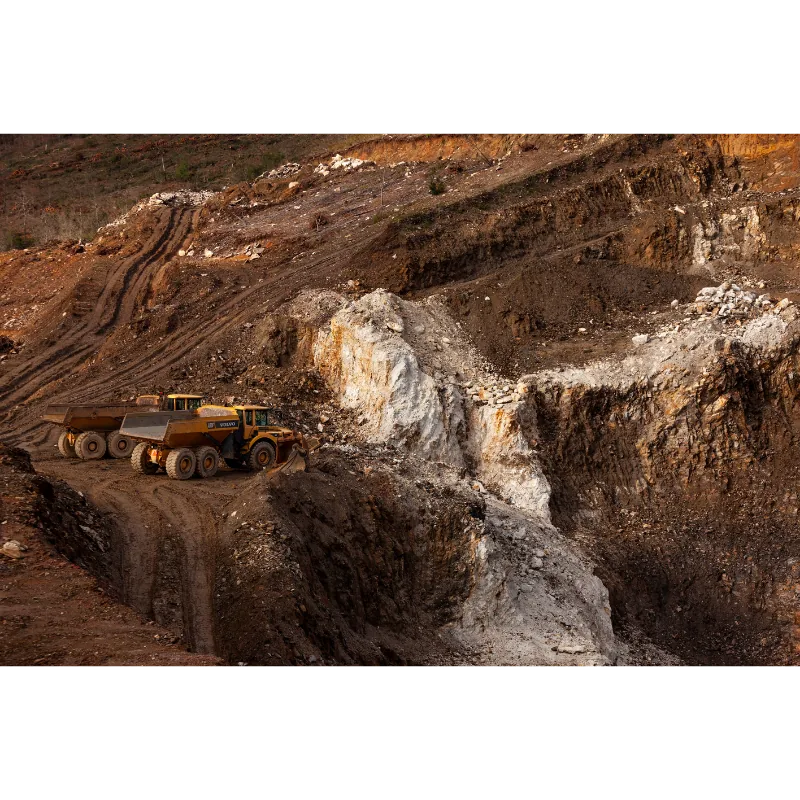
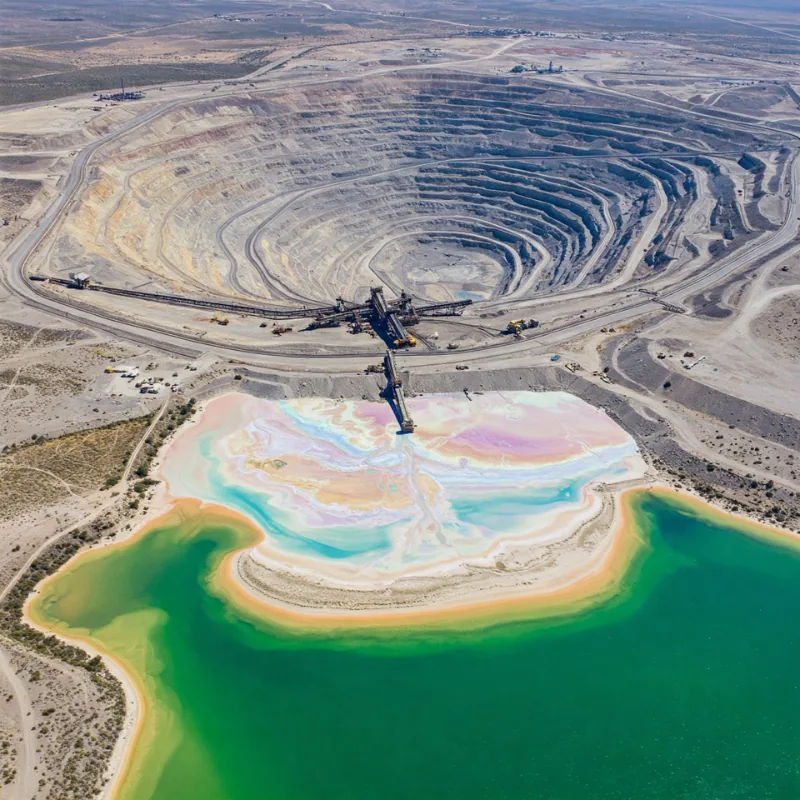
The dominant U.S. source of lithium in drinking water is natural geology: groundwater in arid and semi-arid regions of Arizona, Texas, New Mexico, Nevada, Utah, and the Great Plains is enriched by long contact times with lithium-bearing rock and evaporite minerals. Arizona dominates the high-concentration tail of UCMR 5 results — Apache Junction, AZ recorded the highest level at 782 ug/L, with multiple Phoenix-metro systems above 150 ug/L. Anthropogenic contributions are smaller but growing: lithium-brine extraction (Clayton Valley, NV; the Salton Sea geothermal area in CA), hard-rock mining, battery and ceramic manufacturing, and end-of-life leachate from landfills accepting consumer electronics. Lubricating greases and pharmaceutical waste streams are minor contributors.
Health risks
EPA's CCL 5 information sheet sets a Subchronic and Chronic Provisional Reference Dose of 2e-3 mg/kg/day for lithium, derived from subclinical hypothyroidism observed in patients on therapeutic lithium. Scaled to drinking water, that RfD corresponds to a Health Reference Level of 10 ug/L for a 70-kg adult drinking 2 L/day — close to many UCMR 5 detections. Therapeutic doses of lithium carbonate (~600–1200 mg/day, equivalent to 100–200 mg/day elemental Li) are 100× to 1000× higher than typical drinking-water exposures and can cause overt hypothyroidism, nephrogenic diabetes insipidus, and chronic kidney disease. Observational studies have also linked low-level environmental lithium exposure to altered neonatal and pediatric neurodevelopment, though causality is unsettled. Lithium has not been classified as a carcinogen by IARC or NTP.
Effective treatments
Does not remove
NSF certifications
Water treatment
Lithium is removed only by treatment processes that target dissolved monovalent cations — primarily reverse osmosis (RO) and cation-exchange resin. RO membranes reject Li+ at 90–99 percent under typical residential operating pressures; NSF/ANSI 58 certifies RO systems for total-dissolved-solids reduction that incidentally captures lithium. Cation exchange (the same chemistry as a residential water softener, but with sodium- or hydrogen-form resin) also removes lithium, though commercial softeners are not generally certified for it. Granular activated carbon, UV disinfection, chlorination, and boiling have no meaningful effect on lithium because Li+ is a small, fully ionized cation with no organic-chemistry hook. NSF/ANSI 53 standard does not currently list lithium as a covered contaminant.
Gallery
Chemistry + classification data sourced from public databases (PubChem, EPA CompTox, IARC monographs); 3D molecular models from 3d.nih.gov where available.