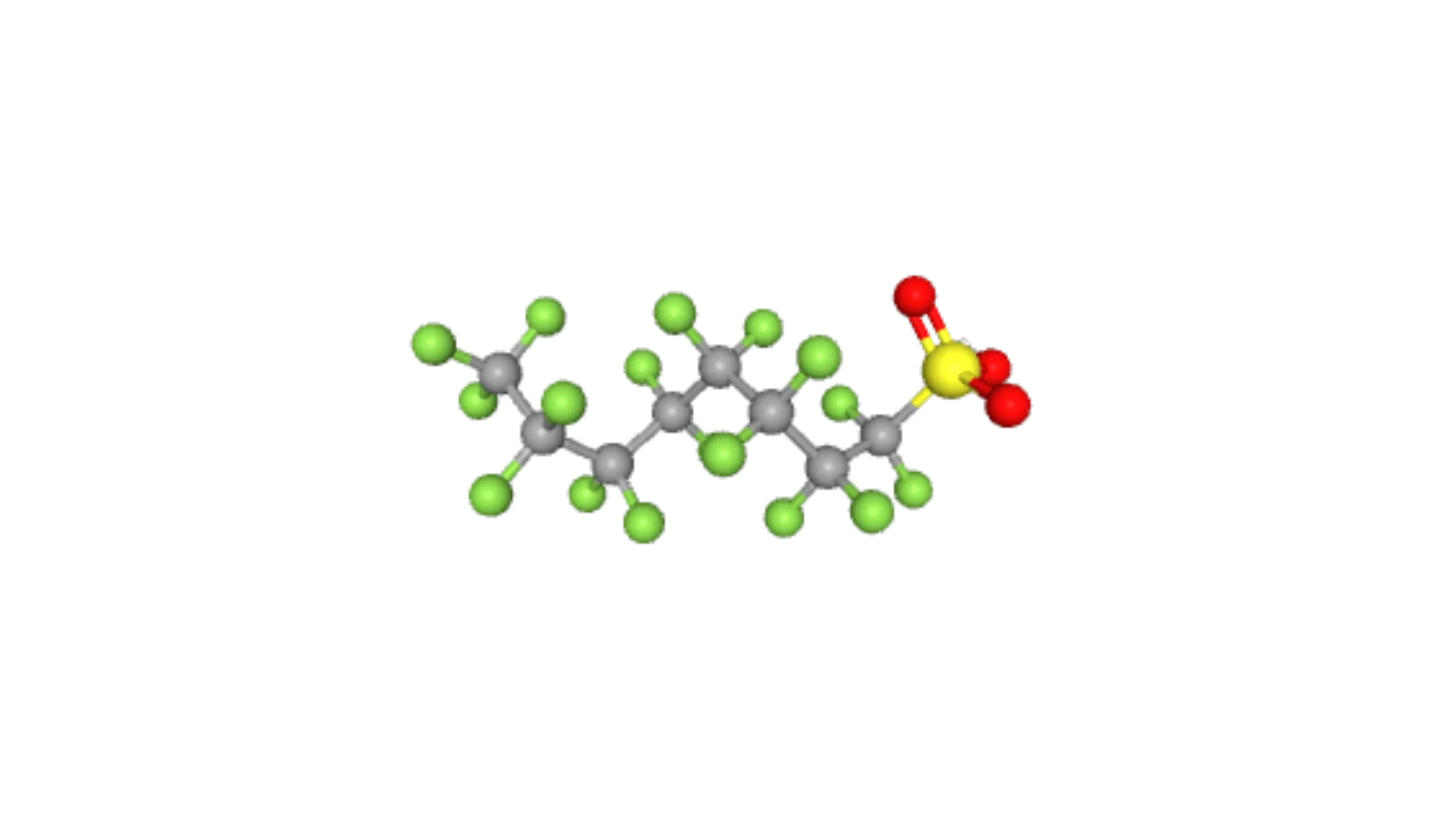
PFOS
Perfluorooctane sulfonate
1,1,2,2,3,3,4,4,5,5,6,6,7,7,8,8,8-heptadecafluorooctane-1-sulfonic acid
An 8-carbon long-chain PFSA — IARC Group 1 carcinogen (2023); 2024 NPDWR individual MCL of 4 ppt with MCLG of zero. Legacy 3M Scotchgard and AFFF chemistry, phased out 2000–2002 under EPA Stewardship.
Primary concern: Cancer (IARC Group 1, 2023)
Affected organ systems
Health effects
Exposure routes
Vulnerable populations
Overview
Perfluorooctane sulfonate (PFOS) is an eight-carbon perfluoroalkyl sulfonic acid and one of the most widely used per- and polyfluoroalkyl substances (PFAS) of the 20th century. From the 1950s through the early 2000s, PFOS served as the active ingredient in 3M's Scotchgard line of stain- and water-resistant treatments for textiles, carpets, and paper, and as a key component of aqueous film-forming foam (AFFF) used by military and civilian fire departments. 3M voluntarily phased out PFOS production between 2000 and 2002 under EPA's PFOA Stewardship Program. PFOS persists indefinitely in the environment, biomagnifies through aquatic food chains, and has an estimated human serum elimination half-life of roughly 5.4 years — among the longest of any PFAS measured in humans.
Pollution sources
Sources
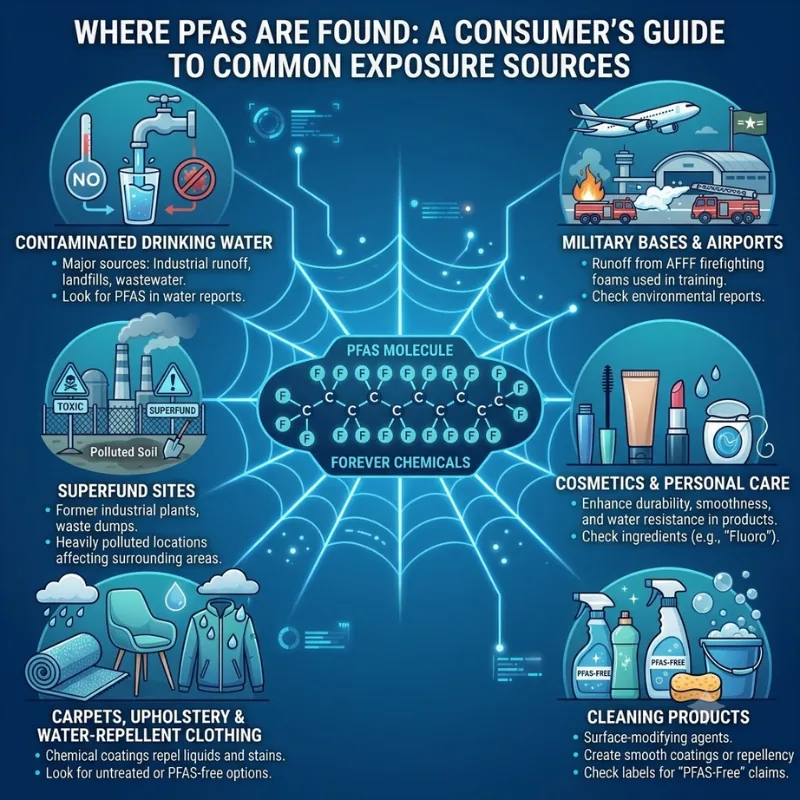
PFOS enters drinking water predominantly through historical use of AFFF at military bases, civilian airports, and fire-training facilities; releases from 3M and other fluorochemical manufacturing sites; and runoff from landfills containing PFOS-treated consumer goods. Communities near former Naval Air Stations, Air Force bases, and industrial AFFF storage sites have documented some of the highest PFOS groundwater concentrations on record. Because PFOS resists degradation and binds strongly to organic matter, contamination plumes can persist for decades and migrate far from the original source.
Health risks
IARC classified PFOS as a Group 1 human carcinogen in 2023, citing sufficient evidence for kidney cancer (alongside PFOA). Epidemiological studies link PFOS exposure to elevated cholesterol, thyroid disease, ulcerative colitis, reduced antibody response to childhood vaccines, decreased birth weight, and pregnancy-induced hypertension. The 2024 EPA Human Health Toxicity Assessment set the lifetime drinking-water health advisory at 0.02 ppt, below current analytical reporting limits. PFOS bioaccumulates: serum levels in the general population have declined since the 3M phaseout but remain detectable in nearly 100% of U.S. adults sampled by NHANES.
Effective treatments
Does not remove
NSF certifications
Water treatment
PFOS is effectively removed by granular activated carbon (GAC), anion exchange resin, and high-pressure membrane processes including reverse osmosis and nanofiltration. PFOS is generally easier to remove than short-chain PFAS because its longer carbon chain adsorbs more strongly to GAC media. NSF/ANSI 53 and NSF P473 certify point-of-use filters specifically for PFOS reduction; NSF/ANSI 58 covers RO systems. Conventional treatment processes — coagulation, sand filtration, disinfection, UV, and ozonation — do not remove PFOS. Boiling water concentrates rather than removes it.
Gallery
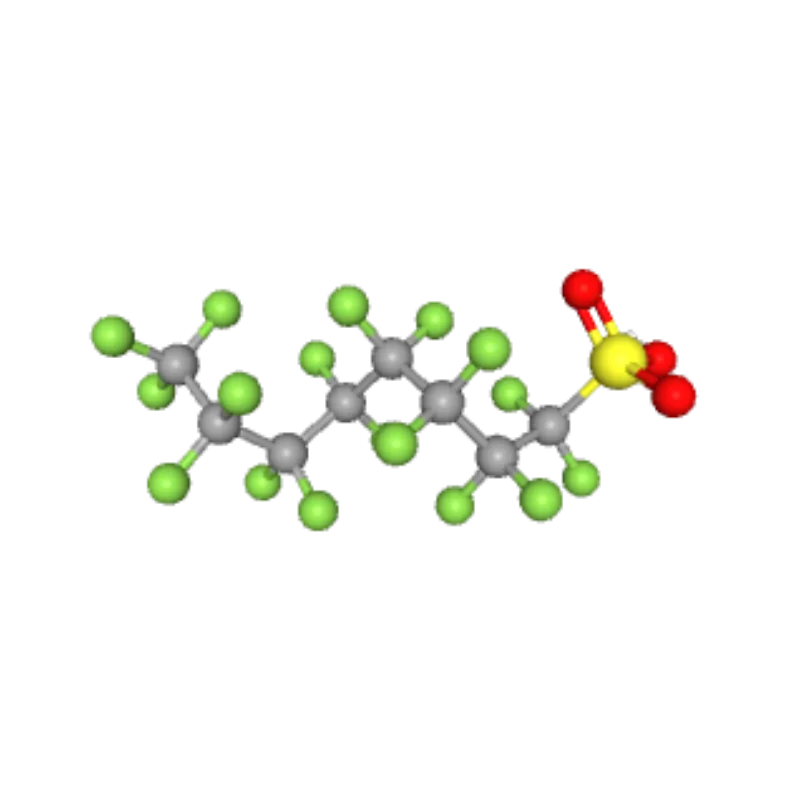
Chemistry + classification data sourced from public databases (PubChem, EPA CompTox, IARC monographs); 3D molecular models from 3d.nih.gov where available.