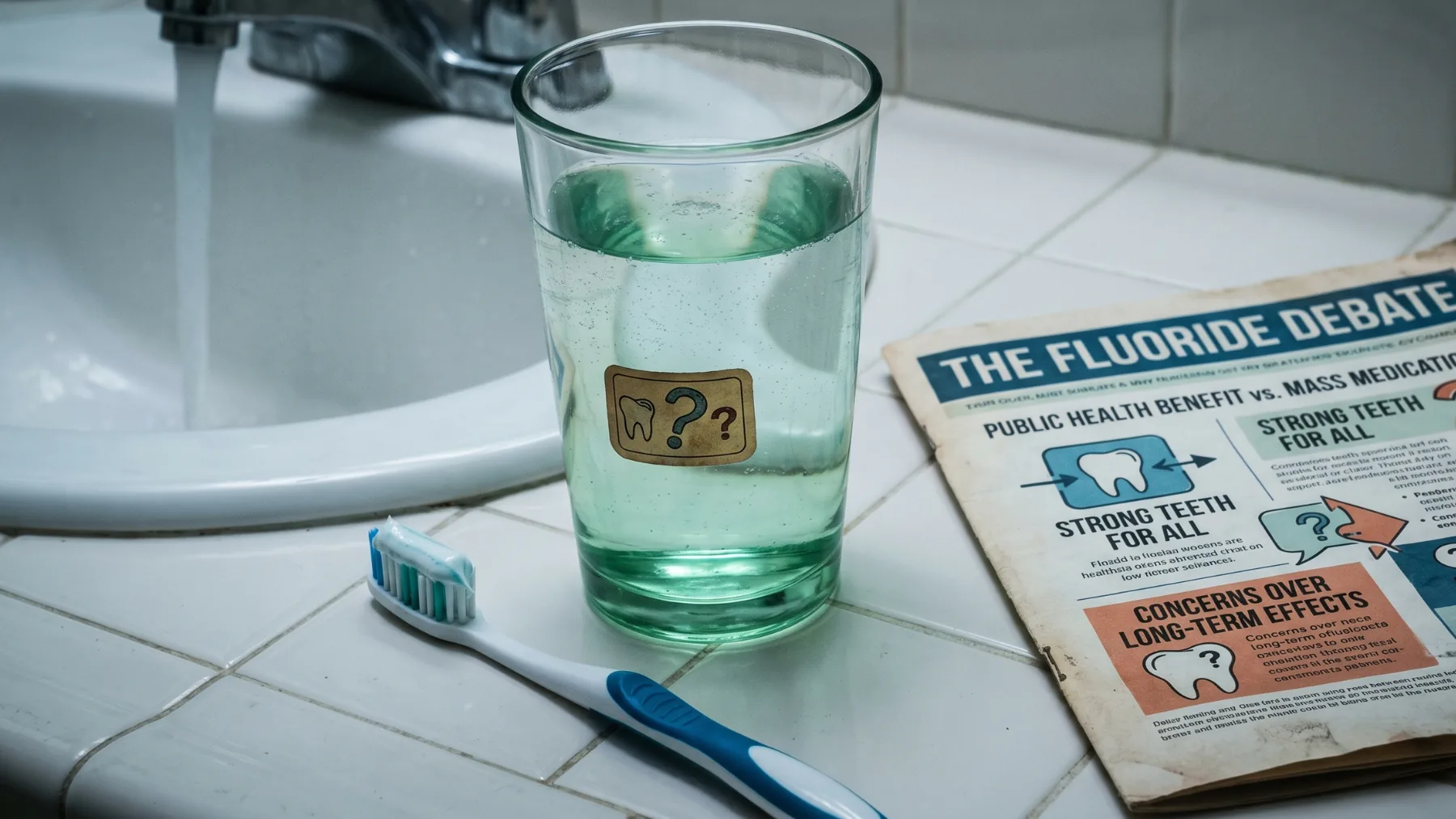
A Balanced Look at Fluoride in Drinking Water
Fluoride is one of the most debated additions to public drinking water. To some it is a public-health triumph that has spared millions of people from tooth decay; to others it is a substance they would rather not consume without their explicit consent. The truth, as is so often the case, is nuanced. This article takes a balanced look at where fluoridation came from, how it works, what the science says about its benefits and risks, and how to remove it if you choose to.
An accidental discovery: "Colorado brown stain"
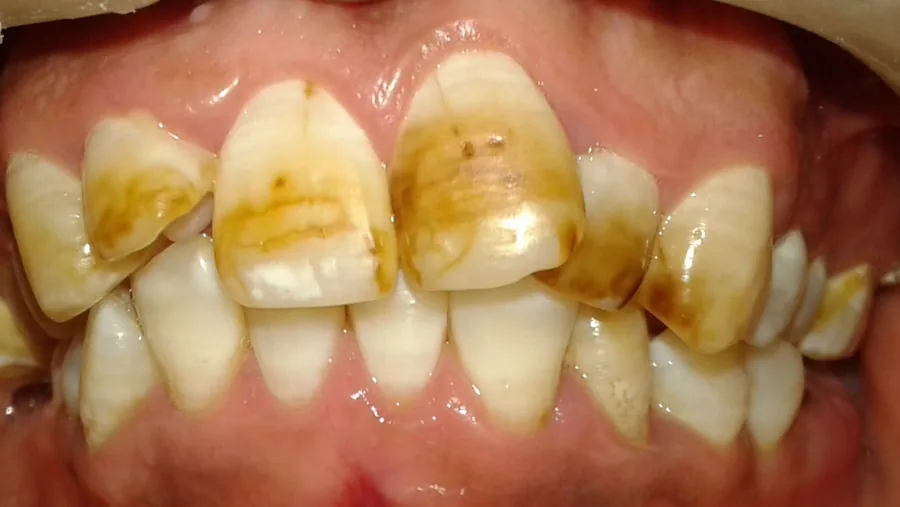
The story of fluoride in drinking water began with an intriguing dental phenomenon in the early 20th century. Dentists in the United States and Italy independently noticed that people with distinctly stained teeth experienced lower rates of dental decay. In Colorado Springs, Colorado, Dr. Frederick S. McKay dedicated his career to understanding the cause of what was locally known as "Colorado brown stain" — later termed "dental mottling" and eventually dental fluorosis.
Early in his investigations, in collaboration with G.V. Black, McKay observed that these mottled teeth, despite their unappealing appearance, seemed less prone to decay. This early research hinted at a complex relationship in which a seemingly negative effect (staining) correlated with a positive one (cavity resistance) — the puzzle that would eventually lead to deliberate water fluoridation.
How fluoride ended up in America's tap water
The timeline of fluoride's introduction is marked by significant research and a few pivotal decisions. Dr. H. Trendley Dean, a U.S. Public Health Service (USPHS) officer, played a crucial role in determining that excessive fluoride intake was the cause of dental fluorosis. His long-term epidemiological studies focused on the relationship between fluoride levels, fluorosis, and tooth decay. By the late 1930s, Dean's work had led to a critical discovery: there appeared to be an optimal, safe level of fluoride that could prevent cavities without causing significant mottling.
In 1944, Dean's hypothesis was put to the test, and in 1945, Grand Rapids, Michigan, became the first city in the world to intentionally fluoridate its drinking water. This was a controlled study, initially sponsored by the U.S. Surgeon General and later by the National Institute of Dental Research (NIDR). The USPHS issued its first federal guidelines that same year.
Over time, the recommended levels were refined. In 1962, the USPHS recommended a range of 0.7 to 1.2 mg/L, which was updated in 2015 to a single recommended level of 0.7 mg/L — a reduction that accounted for the increasing fluoride people now get from other sources, such as toothpaste. By 2008, over 72% of the U.S. population served by public water systems had access to fluoridated water, and today roughly three out of four Americans receive it.
Why it was added: preventing tooth decay
The primary rationale was simple and urgent: preventing tooth decay. In the early 20th century, decay was a widespread and costly health problem affecting people across every age and socioeconomic group. Water fluoridation was viewed as a sweeping public-health solution to a near-universal affliction.
Its key early proponents included the researchers who unraveled the science — Dr. Frederick McKay, G.V. Black, and Dr. H. Trendley Dean — along with the U.S. Public Health Service. The American Dental Association (ADA) has been a long-standing and vocal advocate, consistently endorsing community water fluoridation as safe, effective, and necessary. Other major supporting bodies include the Centers for Disease Control and Prevention (CDC), the American Medical Association (AMA), the World Health Organization (WHO), and the American Academy of Pediatrics. The CDC underscored its view of the measure's impact by naming water fluoridation one of the ten great public-health achievements of the 20th century.
What's actually added to the water
It's worth distinguishing the element from the additive. The fluoride at the center of this story originates from a naturally occurring element found in soil, water, and rock. However, the compounds actually added to water supplies are manufactured for the purpose — typically sodium fluoride, fluorosilicic acid, or sodium fluorosilicate. These are chosen for their solubility, safety, availability, and low cost. Of these, fluorosilicic acid is the most commonly used additive in the United States. So while the base element is natural, the specific forms used in water treatment are selected for practical, large-scale implementation.

How fluoride protects teeth
Fluoride's dental benefit comes predominantly from topical mechanisms — its direct interaction with tooth enamel — rather than from being swallowed. It works on two fronts at once. First, it inhibits demineralization, the loss of minerals from enamel caused by the acids that oral bacteria produce. Second, it promotes remineralization, the natural repair of early enamel decay.
It achieves this by attracting calcium and phosphate ions to the tooth surface, encouraging the formation of fluorapatite — a mineral that is more resistant to acid attack than the enamel's native hydroxyapatite. On top of that, fluoride interferes with the ability of plaque bacteria to produce acid in the first place. This multifaceted action is what makes it effective at preventing the onset and progression of cavities.

The safety debate: fluoride and IQ
Despite the well-established dental benefits, the safety of water fluoridation has been debated since its inception. Historically, some concerns centered on potential links between fluoride and serious conditions like cancer — but extensive reviews by reputable organizations have generally not found convincing evidence of such associations at the levels used in water fluoridation.
More recently, research has increasingly focused on the potential impact of fluoride exposure on neurodevelopment, particularly in children. A significant contribution came from the National Toxicology Program (NTP), whose systematic review concluded with moderate confidence that higher fluoride exposure — specifically above 1.5 mg/L in drinking water — is associated with lower IQ in children. Crucially, the NTP review also stated there was insufficient data to determine whether the current U.S. recommended level of 0.7 mg/L has any negative effect on children's IQ.
The picture is genuinely mixed. Some epidemiological studies — often conducted in regions with naturally high fluoride in groundwater — have suggested a correlation between higher concentrations and poorer IQ scores, and a meta-analysis indicated potential adverse effects at higher exposures. Yet not all research agrees: a study from the University of Queensland found no link between early-childhood exposure to water fluoridation and negative cognitive development, in fact reporting a slightly higher average IQ among those who had consistently consumed fluoridated water. Adding further caution, the National Academies of Sciences, Engineering, and Medicine (NASEM) reviewed the NTP's work and raised methodological concerns — questioning how well findings from high-exposure areas apply to the context of optimally fluoridated water. The honest summary: the risk evidence is strongest at levels well above what U.S. systems target, and remains uncertain at 0.7 mg/L.
The pineal gland question
Another area of emerging interest involves fluoride's potential interaction with the pineal gland. Research suggests that this small gland — owing to its high blood flow and its location outside the blood-brain barrier — can accumulate fluoride, and some studies have noted a correlation between higher pineal fluoride levels and calcification of the gland.
This matters because the pineal gland produces melatonin, the hormone that regulates our sleep-wake cycles. That raises a theoretical concern that fluoride-induced calcification could affect melatonin production and sleep. It's important to be precise here: current validated human studies have not established clear, consistent connections between fluoride exposure, pineal fluoride levels, calcification, and any resulting neurotoxicity. Some research suggests that adequate iodine intake might help mitigate fluoride's effects on the pituitary gland and thyroid hormone production. For now, the fluoride–pineal relationship remains an open question requiring further study in human populations.
Removing fluoride with reverse osmosis
For those who would prefer to reduce or remove fluoride from their drinking water, reverse osmosis (RO) is the most effective and accessible option. An RO system uses water pressure to push water through a semipermeable membrane whose pores are extremely small — small enough to let water molecules pass while rejecting larger molecules and ions, including fluoride. Most RO systems also stack additional carbon and sediment filters, which remove other contaminants and improve taste.
Compared with other home filtration methods, RO stands out for fluoride specifically: depending on the system and membrane design, it removes between 85% and 99% of the fluoride present. (This is worth emphasizing because many common filters — including standard activated-carbon pitchers — do not meaningfully remove fluoride; the RO membrane is the stage that does the work.)
Reasons people choose to remove it
There is no single profile of someone who removes fluoride; the motivations vary.
- Precaution during sensitive life stages. Concerns about possible neurodevelopmental effects — particularly for pregnant women and young children — lead some families to take a precautionary approach, even while the evidence at typical U.S. levels remains debated.
- Controlling total intake. Fluoride isn't only in water — it's in toothpaste, mouthwash, certain foods and beverages, and even some bottled waters. Some people simply want more control over their cumulative exposure, and water is the easiest lever to pull.
- Reducing the risk of dental fluorosis. In areas with naturally high fluoride, or where levels run higher than recommended, removing fluoride can help avoid the cosmetic mottling of fluorosis — especially in young children whose teeth are still forming.
The bottom line
Water fluoridation has a long, well-documented history of reducing tooth decay and is endorsed by many of the world's leading health organizations. At the same time, emerging research has fueled a legitimate debate about potential effects on neurodevelopment, most of it concentrated at exposure levels above what U.S. systems target. For anyone who chooses to limit their intake from drinking water, reverse osmosis offers a reliable means of removal.
Ultimately, whether to remove fluoride is a personal decision — one best grounded in your individual health concerns, your risk tolerance, and an honest reading of the available evidence. Consulting your healthcare and dental professionals can help you weigh those factors and make a choice that fits your family's needs.