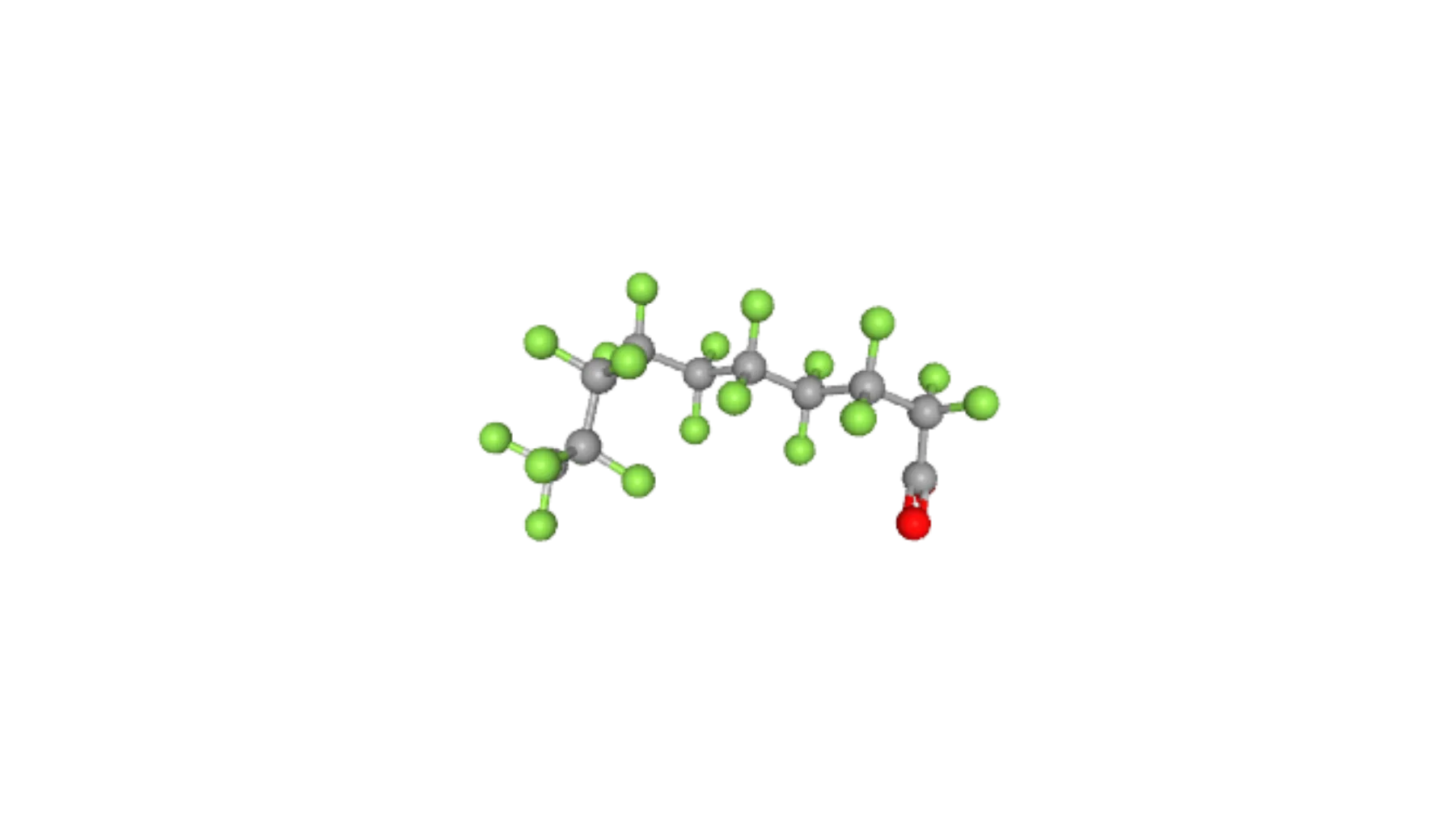
PFDA
Perfluorodecanoic acid
2,2,3,3,4,4,5,5,6,6,7,7,8,8,9,9,10,10,10-nonadecafluorodecanoic acid
A 10-carbon long-chain perfluorocarboxylic acid (PFCA) with high environmental persistence and human bioaccumulation. 2024 EPA IRIS RfD for immune/developmental effects yields the strictest UCMR 5 health benchmark.
Primary concern: Immune and developmental effects
Affected organ systems
Health effects
Exposure routes
Vulnerable populations
Overview
Perfluorodecanoic acid (PFDA) is a 10-carbon perfluoroalkyl carboxylic acid — two carbons longer than PFOA and at the upper end of the long-chain PFCA family. Its long perfluoroalkyl chain gives it low water solubility (about 14 mg/L), strong affinity for protein-rich tissues, and a multi-year human serum elimination half-life: published estimates span roughly 1.6 to 12 years depending on cohort and sex, with most recent peer-reviewed values landing in the 3–5 year range. The combination of extreme environmental persistence and human bioaccumulation drives PFDA's EPA toxicology profile: EPA finalized an Integrated Risk Information System (IRIS) toxicological review of PFDA in 2024, yielding the most conservative drinking-water health benchmark of any UCMR 5 analyte. PFDA has been detected in 265 U.S. public water systems serving roughly 5.8 million people across 19 states.
Pollution sources
Sources
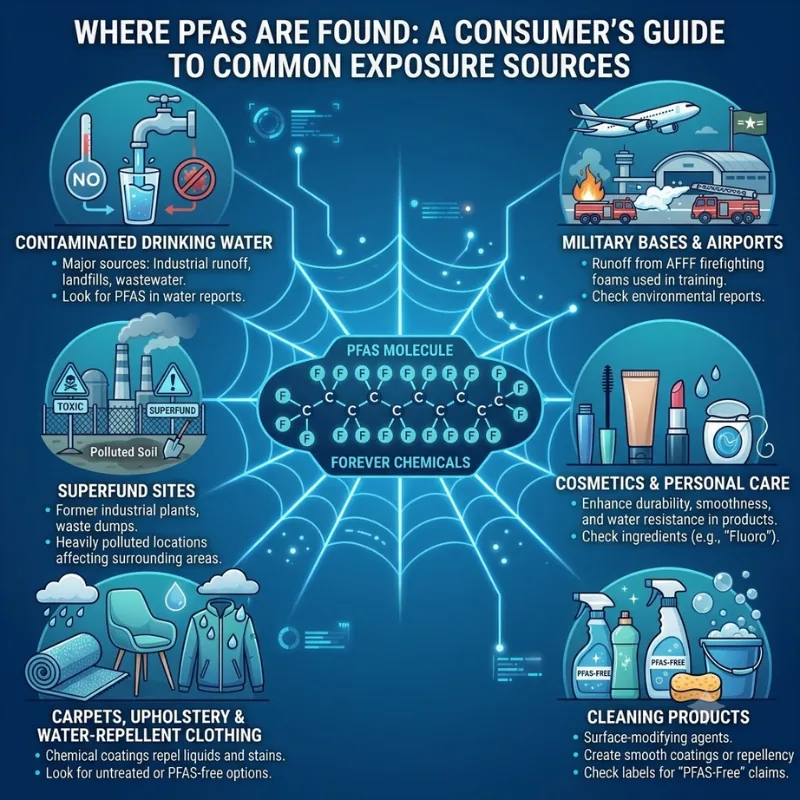
PFDA enters drinking water through the same channels as other long-chain PFCAs: (1) industrial discharges and atmospheric deposition from fluoropolymer and fluorochemical manufacturing — North Carolina dominates the UCMR 5 PFDA detection list (49 utilities, including a tight cluster of Harnett County and Cumberland County systems all measuring 3.90 ppt), reflecting the Chemours Fayetteville Works plume in the Cape Fear River basin that drives much of the regional PFAS contamination story; (2) AFFF firefighting-foam release sites at military installations and civilian airports — Fort Liberty (formerly Fort Bragg) appears in the NC cluster; and (3) environmental biotransformation of long-chain fluorotelomer precursors used in stain- and grease-resistant coatings on textiles, paper, and food packaging. The chronic-source pattern at Pico Rivera, CA (116 of 157 tests positive at 2.46 ppt) and the Gadsden, AL water complex (14 of 42 tests at 1.48 ppt) point to identifiable localized industrial sources outside the dominant NC cluster.
Health risks
EPA's 2024 IRIS toxicological review of PFDA identifies immune suppression — specifically reduced antibody response to childhood vaccines — and developmental effects as the dose-defining endpoints, deriving a chronic Reference Dose that is among the lowest the agency has set for any PFAS. The chronic Reference Dose is so low that virtually any detection of PFDA above the UCMR 5 reporting limit constitutes an exceedance — 251 of the 265 PFDA-detecting utilities exceed it. PFDA has not been formally classified as a carcinogen by IARC or NTP, but the structural similarity to PFOA (IARC Group 1) means cancer screening pressure on PFDA is likely to grow. Reported human serum elimination half-lives vary widely across published cohorts (1.6 years in Worley 2017 vs ~12 years in Olsen 2009 male average) — the wide range reflects real biological and methodological differences and is one reason a single numeric serum half-life is not pinned in this record.
Effective treatments
Does not remove
NSF certifications
Water treatment
PFDA's long perfluorinated chain makes it one of the easier UCMR 5 PFAS to remove with granular activated carbon: long-chain PFCAs adsorb strongly onto GAC media and resist early breakthrough, comparable to or better than PFOA. Anion exchange resins and high-pressure membranes (reverse osmosis, nanofiltration) are also highly effective. Conventional treatment processes — coagulation, sand filtration, disinfection, UV, and ozonation — do not remove PFDA. Boiling concentrates rather than removes it. NSF/ANSI 53 and NSF P473 certify point-of-use filters for general PFAS reduction; NSF/ANSI 58 covers RO systems. The IRIS-derived health benchmark sits below analytical reporting limits, so no treatment process — including RO at >99 percent rejection — is guaranteed to produce finished water below it; utilities should expect the federal Hazard Index calculation (which excludes PFDA) and the eventual regulatory limit to be the practical compliance target.
Gallery
Related contaminants
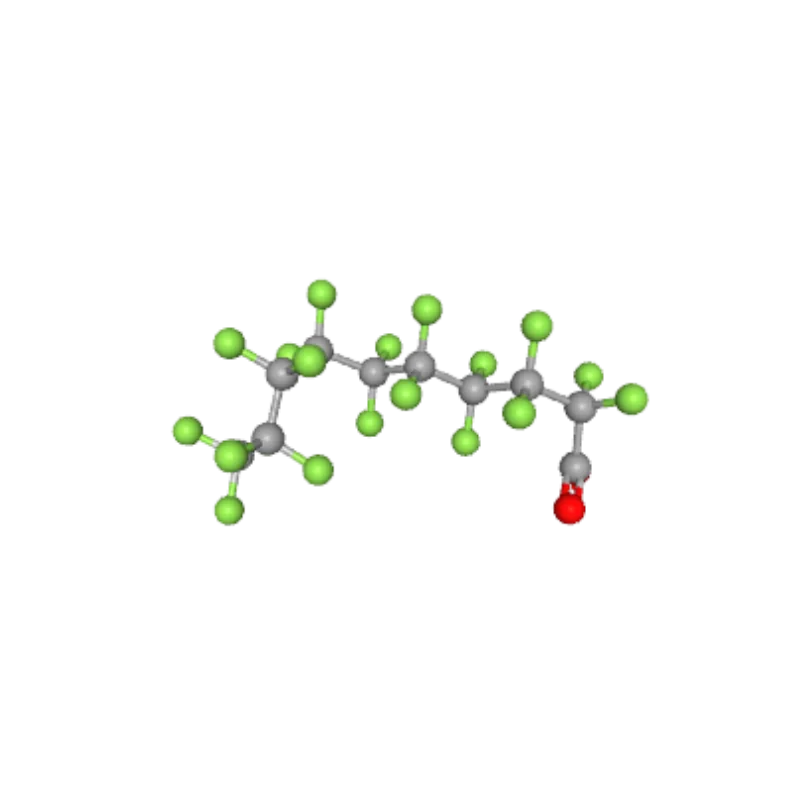
Chemistry + classification data sourced from public databases (PubChem, EPA CompTox, IARC monographs); 3D molecular models from 3d.nih.gov where available.