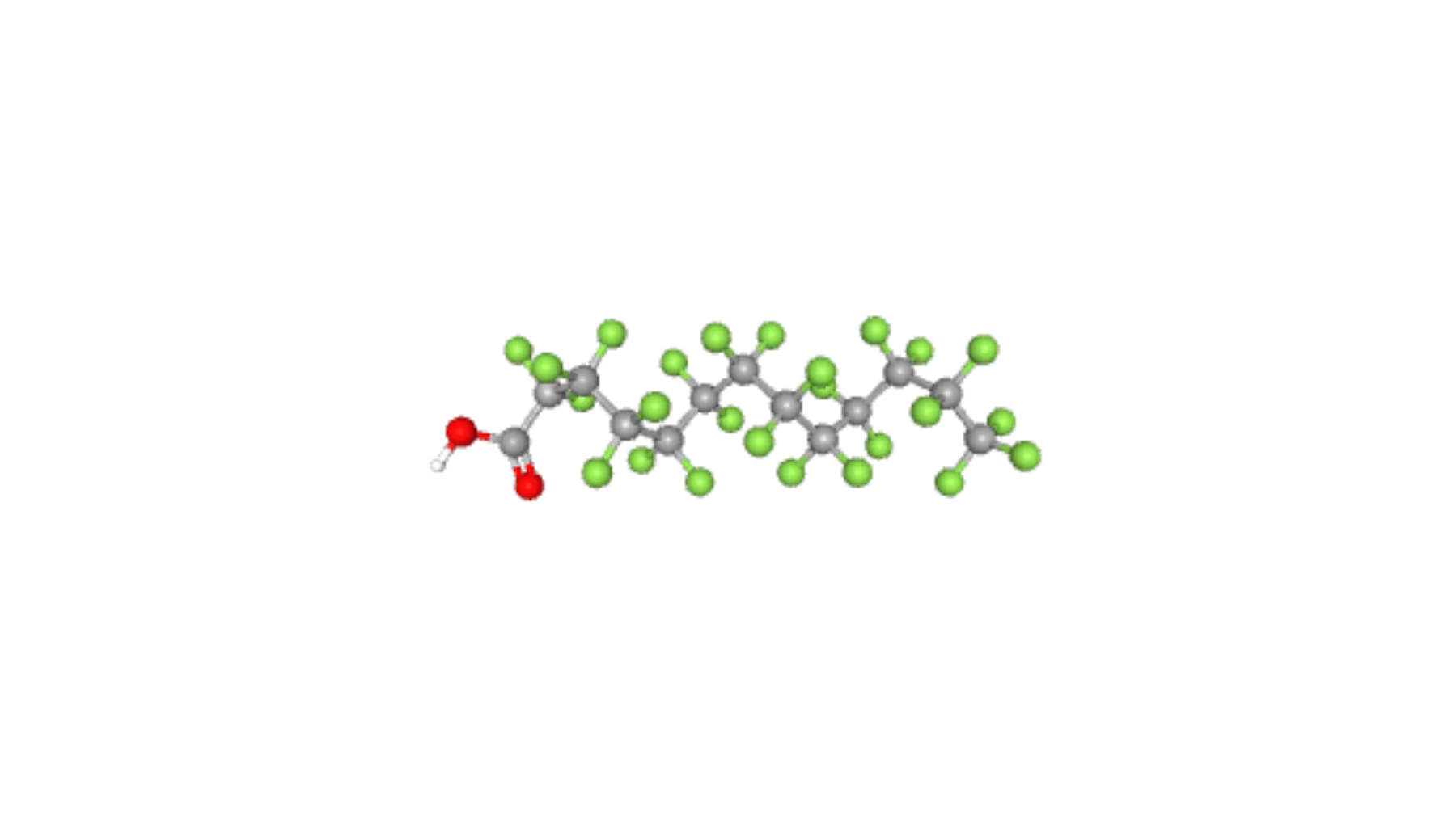
PFTrDA
Perfluorotridecanoic acid
2,2,3,3,4,4,5,5,6,6,7,7,8,8,9,9,10,10,11,11,12,12,13,13,13-pentacosafluorotridecanoic acid
A 13-carbon long-chain PFCA between PFDoA (12C) and PFTA (14C). No PFTrDA-specific RfD; 0.006 ppt benchmark derived from EPA's 2024 IRIS PFDA value. Detected at 41 utilities serving 371K people across 8 states.
Primary concern: Immune and developmental effects (PFDA-surrogate)
Affected organ systems
Health effects
Exposure routes
Vulnerable populations
Overview
Perfluorotridecanoic acid (PFTrDA, also abbreviated PFTriA) is a 13-carbon perfluoroalkyl carboxylic acid (C13HF25O2, MW 664) — between PFDoA (12C) and PFTA (14C) at the long extreme of the PFCA chain-length spectrum monitored under UCMR 5. The very long perfluorinated chain gives PFTrDA negligible water solubility, extreme bioaccumulation potential, and a multi-year human serum elimination half-life on par with PFDA (~3-5 years) or longer. PFTrDA has been detected at 41 U.S. public water systems serving roughly 371,000 people across 8 states, with Massachusetts dominating the occurrence list (15 utilities, 234K served) and Alabama second (10 utilities).
Pollution sources
Sources
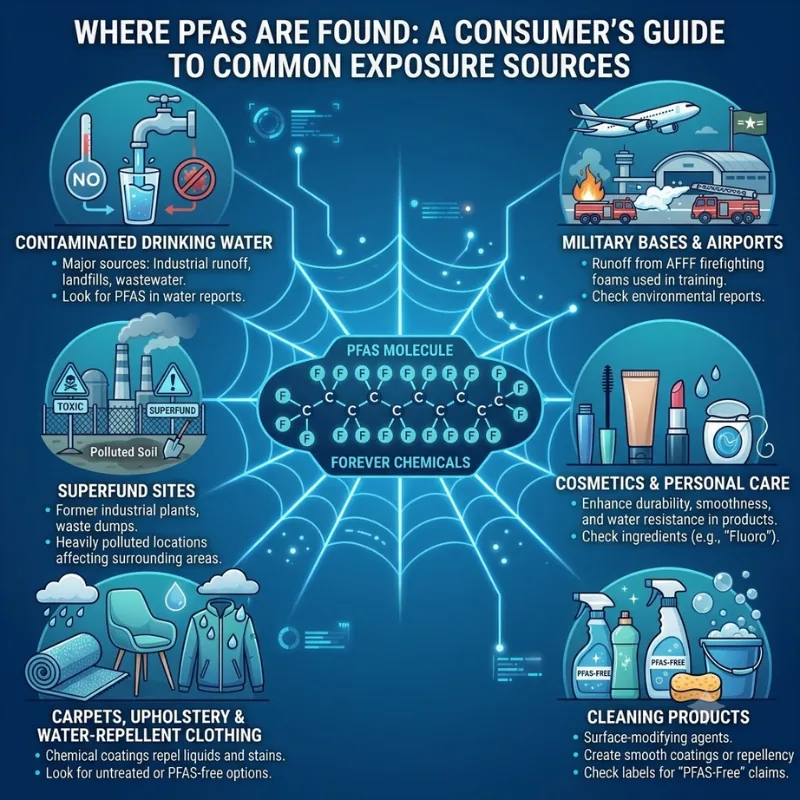
PFTrDA sources mirror those of PFTA and PFDoA: environmental biotransformation of very-long-chain fluorotelomer precursors used in stain-, grease-, and water-resistant coatings on textiles, paper, food packaging, and carpet treatments accounts for most of the diffuse-background detection in the Massachusetts municipal water systems on the occurrence list. Localized industrial point sources include Lincoln, AL (12.5 ppt) and the Gadsden, AL Etowah County metals-finishing district cluster (Gadsden Water Works, Whorton Bend, Highland Water Authority, Northeast Etowah County Co-op all at 2.92 ppt), and Fort Drum, NY (0.008 ppt over 76 tests) is a direct on-base AFFF-related detection. Long-chain PFAS were phased out under EPA's 2010/2015 PFOA Stewardship Program, so contemporary PFTrDA in source water arises primarily from legacy environmental reservoirs and biotransformation of remaining long-chain telomer feedstocks.
Health risks
There is no PFTrDA-specific EPA Reference Dose or IRIS toxicological review. The 0.006 ppt drinking-water benchmark is derived by applying EPA's 2024 IRIS PFDA toxicity value as a surrogate, on the basis of structural similarity and shared toxicological endpoints across long-chain PFCAs: hepatotoxicity, immune suppression, thyroid disruption, and developmental effects. PFTrDA has not been classified as a carcinogen by IARC or NTP. Human pharmacokinetic data is essentially absent; serum half-life is expected to be multi-year. PFTrDA is not included in the 2024 NPDWR Hazard Index mixture and has no individual federal MCL.
Effective treatments
Does not remove
NSF certifications
Water treatment
PFTrDA is among the easiest UCMR 5 PFAS to remove with granular activated carbon: very-long-chain PFCAs adsorb extremely strongly onto GAC and break through later than shorter PFCAs at comparable loading rates. Anion exchange resin and high-pressure membranes (reverse osmosis, nanofiltration) are also highly effective. Conventional treatment processes — coagulation, sand filtration, disinfection, UV, and ozonation — do not remove PFTrDA. Boiling concentrates rather than removes it. NSF/ANSI 53 and NSF P473 certify point-of-use filters for general PFAS reduction; NSF/ANSI 58 covers RO systems. As with PFDA, PFDoA, PFUnA, and PFTA, the 0.006 ppt PFDA-surrogate guideline sits below analytical reporting limits and is not operationally verifiable — utilities meeting the long-chain PFAS NPDWR MCLs with GAC, AIX, or RO will incidentally control PFTrDA at the same time.
Gallery
Related contaminants
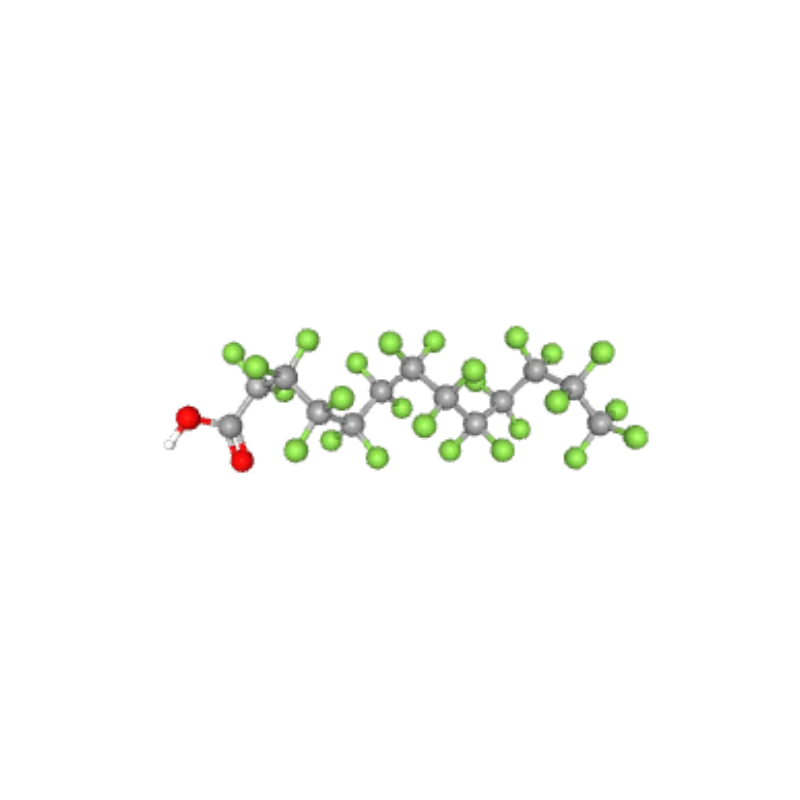
Chemistry + classification data sourced from public databases (PubChem, EPA CompTox, IARC monographs); 3D molecular models from 3d.nih.gov where available.