Health Implications of Disinfection Byproducts in Drinking Water
Water is fundamental to human life, and ensuring its safety is a cornerstone of public health. Municipal water treatment plays a vital role in eliminating harmful microorganisms, producing potable water for entire communities. But this crucial process has an unintended consequence: the formation of chemical compounds known as disinfection byproducts (DBPs). Though often present only in trace amounts, these substances have been linked to a range of adverse health effects — and they deserve careful consideration from health-conscious individuals and homeowners alike.
How your water gets disinfected — and the annual chlorine switch
The primary goal of water treatment is to eradicate disease-causing bacteria, viruses, and other pathogens. To achieve this, water suppliers commonly use disinfectants such as chlorine and chloramine. Many U.S. treatment facilities rely on chloramines — a combination of chlorine and ammonia — as their primary year-round disinfectant. Chloramines are more stable than chlorine alone, providing longer-lasting protection as water travels through the distribution system, and they can reduce the formation of certain DBPs.
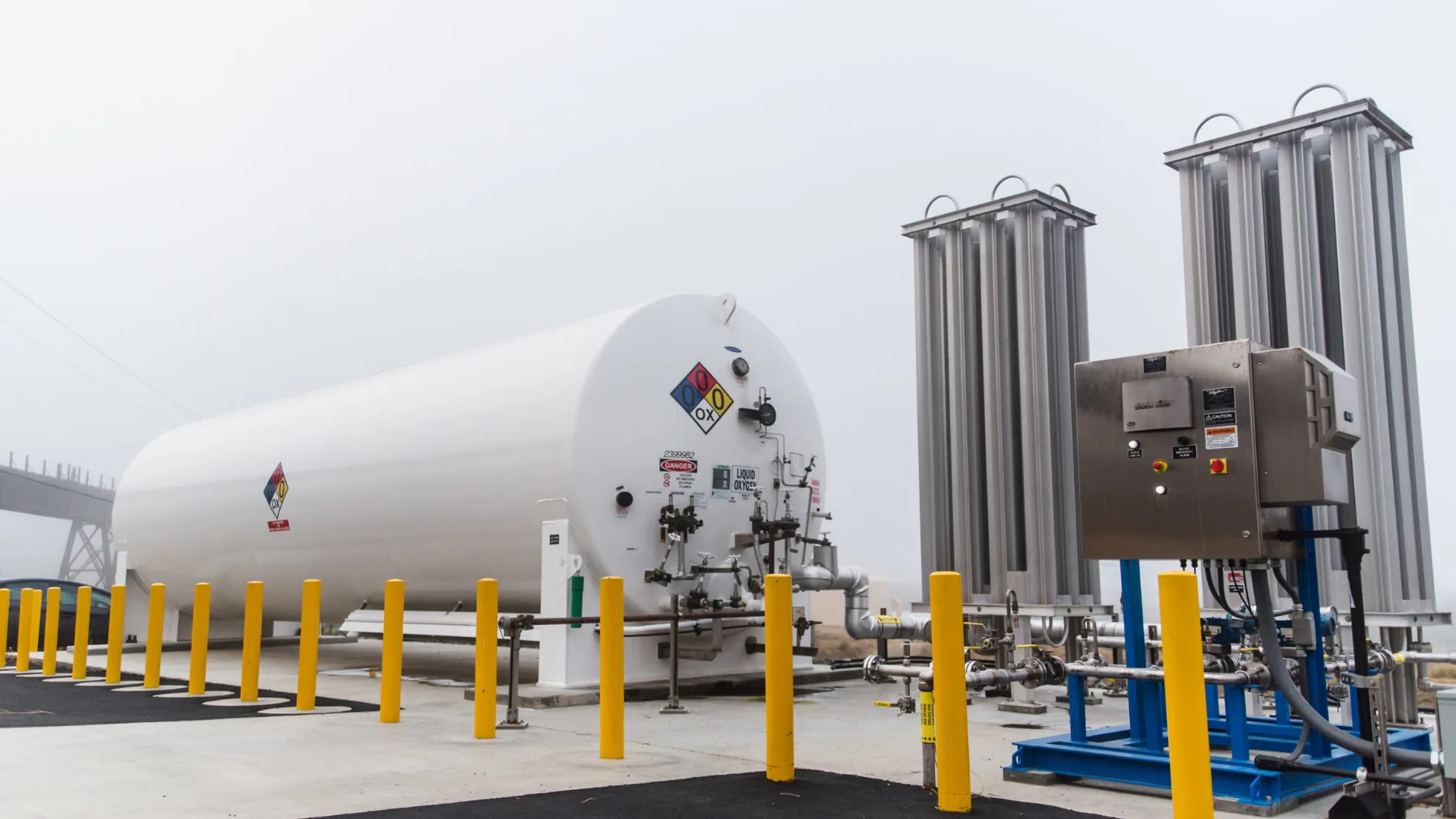
Many facilities also perform an annual disinfection changeover, typically in the spring. During this period — which lasts several weeks — the treatment process temporarily switches to chlorine-only disinfection to help cleanse the distribution system and manage biofilm growth inside the pipes. If you've ever noticed a more pronounced chlorine odor in your tap water at a certain time of year, an annual switch is the likely reason.
How disinfection byproducts form
The formation of DBPs is an essentially unavoidable chemical reaction: it happens when disinfectants interact with naturally occurring organic matter (NOM) present in the source water. This organic matter comes from decaying vegetation, soil runoff, and other natural sources, and it tends to be more prevalent in surface water like rivers and lakes.
Several factors influence how much and what type of DBP forms:
- Water temperature — warmer water generally accelerates the reactions that create DBPs.
- pH level — affects which specific byproducts emerge and in what quantities.
- Organic matter concentration — more NOM means more raw material for disinfectants to react with.
- Disinfectant dosage and contact time — higher levels and longer contact lead to more DBPs.
- Bromide ions — when present, these lead to brominated DBPs, a class generally considered more harmful than their chlorinated counterparts.
The main culprits: THMs and HAAs
A variety of DBPs can form in drinking water, but two groups are the most common and the most heavily regulated: trihalomethanes (THMs) and haloacetic acids (HAAs).
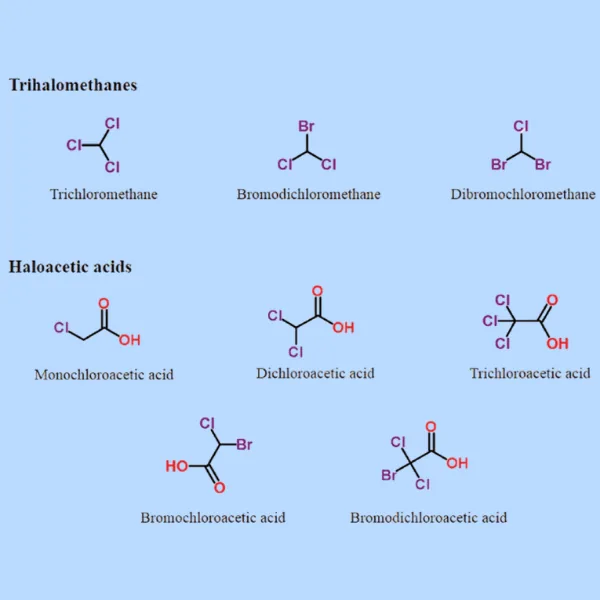
Trihalomethanes (THMs) — which include chloroform, bromodichloromethane, dibromochloromethane, and bromoform — have been associated with an increased risk of certain cancers, particularly bladder and colorectal cancer, through long-term exposure. Some research suggests this risk may exist even at levels currently considered safe by regulators. THM exposure has also been linked to potential liver and kidney problems and to adverse reproductive outcomes such as miscarriage.
Haloacetic acids (HAAs) include monochloroacetic acid, dichloroacetic acid (DCA), trichloroacetic acid (TCA), monobromoacetic acid, and dibromoacetic acid. The EPA considers DCA and TCA potential human carcinogens based on animal studies showing an increased incidence of liver cancer, and some human studies suggest a link between HAA exposure and bladder cancer. At high concentrations, animal studies indicate HAAs can be toxic to the liver, testes, pancreas, brain, and nervous system, with some specific HAAs demonstrating neurotoxic and reproductive/developmental effects.
Beyond these regulated groups, a set of emerging byproducts is also raising concern. N-nitrosamines, such as N-nitrosodimethylamine (NDMA), form when chloramines react with certain organic compounds; NDMA is classified as a probable human carcinogen. Others — haloacetonitriles (HANs), halonitromethanes (HNMs), and iodinated DBPs (I-DBPs) — are still being studied for their potential health risks.
How DBPs affect the body
Once DBPs enter the body, they can disrupt normal physiological functions through several mechanisms. Some induce oxidative stress, a process that damages cells and DNA. Others interfere with metabolic pathways and enzyme activity, with certain HAAs showing neurological effects at higher exposure levels. Nitrates and nitrites — which can contribute to nitrosamine formation — can impair the blood's ability to carry oxygen, leading to a condition called methemoglobinemia that is particularly dangerous for infants. And chronic, low-level exposure to a mixture of various DBPs can place an ongoing burden on the body's natural detoxification processes.

Reducing your exposure
Given the potential health implications of DBPs — even at levels that meet regulatory standards — many people look for ways to further reduce their exposure. Home water filtration is an effective way to do this, adding an extra layer of protection for the water you drink. Two technologies do most of the work, and they're at their best when combined.
Activated carbon
Activated carbon filtration is a widely recognized and effective method for removing chlorine and many organic contaminants. By adsorbing these substances onto its porous surface, activated carbon significantly reduces the chlorine that would otherwise react to form DBPs — and it's also effective at removing many pre-formed DBPs, including THMs and HAAs. Both granular activated carbon (GAC) and carbon block are used for this purpose.
There is one important caveat: activated carbon is not equally effective against every type of DBP. It is less reliable against nitrosamines, and under some conditions carbon has even been observed to promote nitrosamine formation. This is exactly why a high-quality, multi-stage approach matters rather than relying on carbon alone.
Reverse osmosis
Reverse osmosis (RO) systems offer a more comprehensive solution. An RO membrane filters out a wide spectrum of contaminants, including a high percentage of both THMs and HAAs, and studies suggest it is highly efficient at removing these regulated DBPs. RO can also help with nitrosamines — the area where carbon struggles — though efficiency varies with the specific membrane and operating conditions, and certain high-rejection membranes perform especially well. While an RO system is a larger investment than a basic carbon filter, it offers the broadest protection for those seeking the highest level of water purity. In practice, pairing carbon with an RO membrane covers the widest range of DBPs.
The bottom line
Municipal water treatment is essential for public health — but the very process that protects us from pathogens can create byproducts that carry their own risks. Disinfection byproducts like trihalomethanes, haloacetic acids, and nitrosamines have been linked to a variety of adverse health effects through long-term exposure. Investing in a filtration system — whether activated carbon, reverse osmosis, or ideally both — is a prudent step toward cleaner, healthier drinking water and a meaningful reduction in your exposure to these unseen contaminants.