
Navigating PFAS: Protecting Your Health from "Forever Chemicals"
What is PFAS?
PFAS (per- and polyfluoroalkyl substances) are a group of man-made chemicals that have been used in a variety of industries since the 1940s. Originally developed during WWII for their heat and chemical resistance properties, PFAS chemicals are now found in many everyday products, including non-stick cookware, food packaging, and firefighting foam.
PFAS can enter the body through contaminated drinking water, food, or air. They can also be absorbed through the skin.
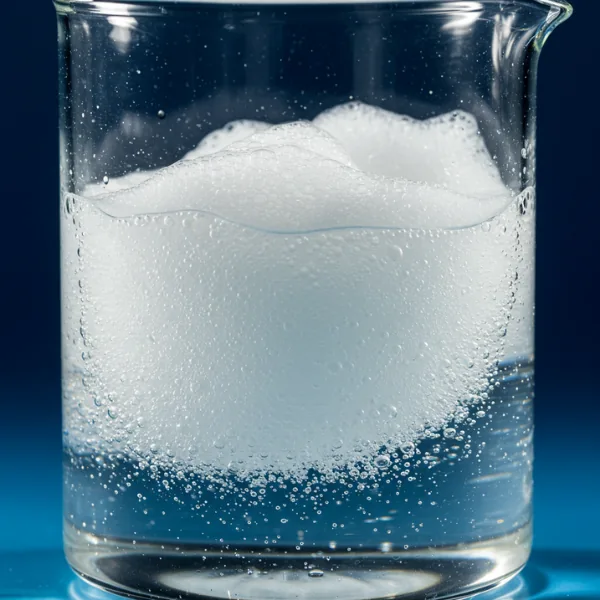
In this picture there is a foamy substance accumulating on top of the water. This is what a high concentration of PFAS in water can look like. Although similar in appearance to soap, you do not want to lather this chemical on your hands. Once PFAS is in your body, depending on the type, it could take decades for the natural biological processes (liver and kidney pathways) to remove it — if at all successful.
How PFAS spreads through the environment
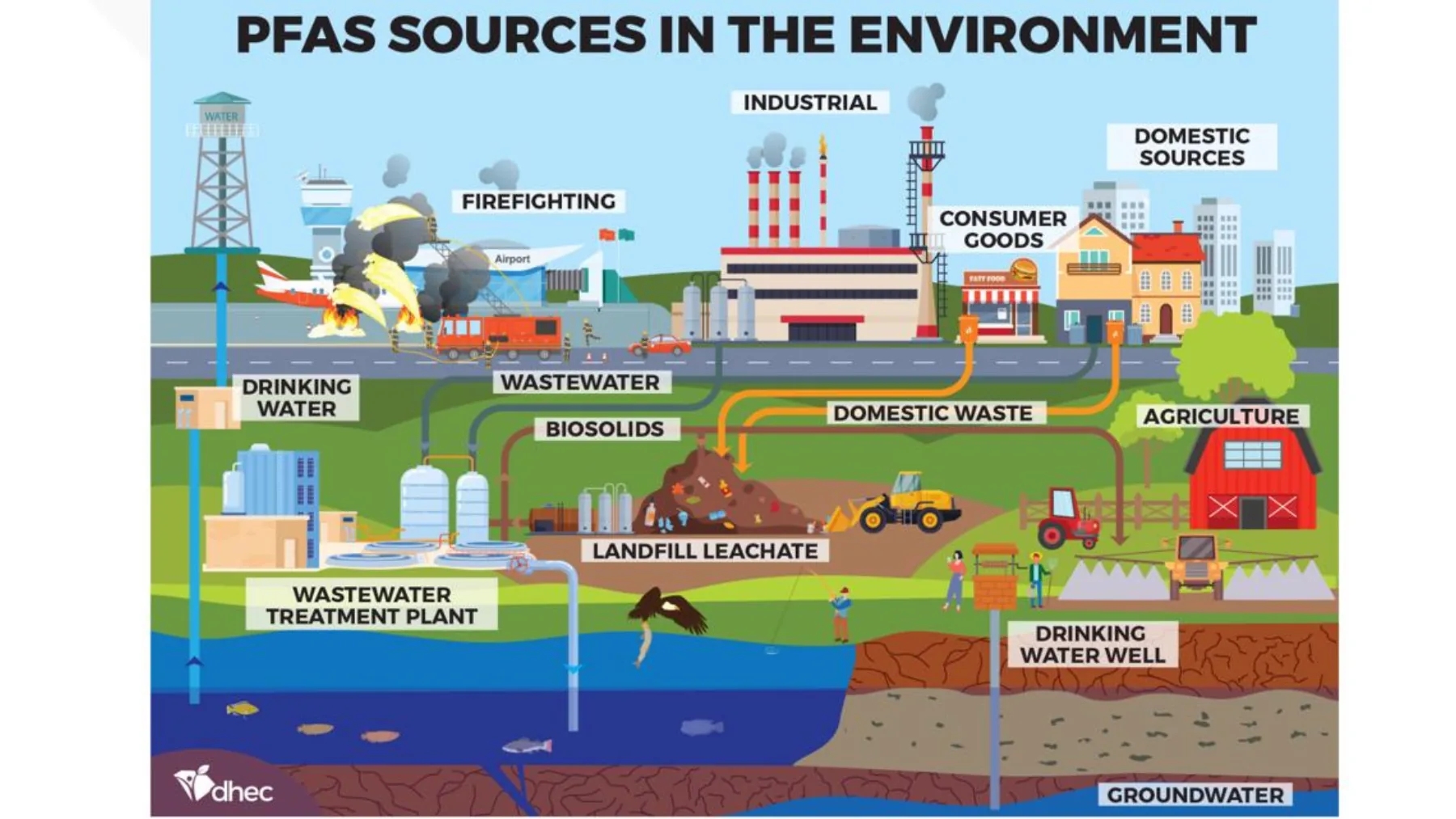
Unfortunately, PFAS in the environment is now a widespread and pervasive issue, affecting water, soil, and air on a global scale. PFAS originates from a wide array of human-made products, spanning industrial applications to everyday consumer goods. Manufacturing processes — particularly those involving fluoropolymers — release PFAS into the environment through wastewater and air emissions. Consumer products like non-stick cookware, stain-resistant fabrics, and firefighting foams also contribute significantly to the widespread dispersion of these chemicals.
For instance, take a look at this carpet manufacturing facility footage. Up until it was discovered that PFAS was a harmful contaminant, it was sprayed on consumer products like carpet to make them stain-resistant or waterproof. Consequently, drinking water supplies — both public and private — are increasingly affected, posing a direct risk to human health.
Why PFAS persists — the "forever chemicals"
PFAS leaches into water sources, contaminating groundwater through industrial discharge and landfill seepage. Surface water — including rivers and lakes — becomes polluted through runoff from contaminated soil and dust particle deposition. Due to their persistent nature ("forever chemicals"), PFAS have been detected in virtually every corner of the globe, including remote Arctic regions.
The extraordinary persistence of PFAS — earning them the moniker "Forever Chemicals" — stems directly from their unique chemical structure. At the heart of PFAS molecules is a chain of carbon atoms linked to fluorine atoms. This carbon–fluorine (C–F) bond is one of the strongest in organic chemistry, requiring a significant amount of energy to break. This inherent stability makes PFAS resistant to typical environmental degradation processes, such as photolysis, hydrolysis, and biodegradation.
Furthermore, PFAS molecules often possess a hydrophilic (water-loving) head and a hydrophobic (water-repelling) tail. This amphiphilic nature allows them to readily migrate through various environmental compartments, including water, soil, and air. They can also accumulate at interfaces, such as the surface of water or soil particles, further hindering their breakdown.
This combination of strong chemical bonds and amphiphilic properties explains why PFAS persist in the environment for decades — if not centuries — and why they are so challenging to remove through conventional remediation methods.
Not all PFAS are equally persistent or equally easy to deal with, however. The length of the carbon chain — and the type of functional group attached to it — strongly influences how readily a given molecule can be broken down. This is the basis for the important distinction between long-chain PFAS, such as the legacy compounds PFOA and PFOS, and the short-chain replacements that industry developed to take their place — including GenX chemicals. Ironically, while these shorter-chain alternatives were marketed as safer substitutes, their smaller molecular size can make them more mobile in water and, in some cases, harder to capture with conventional filtration. That is exactly why they have become a growing focus of newer testing programs and drinking-water regulations.
How to reduce your exposure
Reducing PFAS exposure involves a multifaceted approach, with a significant focus on safeguarding your drinking water. Beyond dietary adjustments — limiting consumption of potentially contaminated fish and produce, avoiding non-stick cookware — prioritizing clean drinking water is paramount.
Begin by understanding your water's PFAS levels through water testing or by reviewing your water supplier's historical samples. Consider implementing a robust filtration system like one of getwatertech's RO systems to provide a simple, effective solution. Selecting the appropriate filter hinges on factors like your specific PFAS levels, water volume, and budget.
Crucially, consistent maintenance and timely filter replacements are essential to ensure these systems continue to provide reliable protection against PFAS in your drinking water — offering a direct and substantial benefit to your overall health. By proactively addressing water contamination, you can significantly reduce your daily PFAS intake, contributing to long-term well-being and a lower PFAS blood concentration.

How reverse osmosis removes PFAS
When it comes to removing PFAS from drinking water, reverse osmosis (RO) systems stand out as a highly effective solution. RO systems utilize a semi-permeable membrane that effectively removes a wide range of contaminants — including PFAS — by forcing water through under pressure. The microscopic pores in these membranes are incredibly small (typically on the order of 0.0001 microns) — smaller than the size of most PFAS molecules.
This size-exclusion mechanism ensures that PFAS and other impurities are effectively trapped and separated from the purified water. Reverse osmosis is particularly well-suited for removing PFAS due to its ability to target contaminants based on their molecular size and charge. While other filtration methods — such as activated carbon — can also be effective, they may not be as efficient in removing smaller PFAS molecules.
RO systems provide a comprehensive solution for addressing PFAS contamination in drinking water, offering peace of mind and ensuring access to clean, safe water for consumption.