
Potential Changes to Water Regulations
U.S. environmental policy is entering a period of significant review and potential redirection in 2025, particularly where water quality is concerned. Under EPA Administrator Lee Zeldin, the administration's stated goals center on deregulation, reducing compliance costs, promoting domestic energy through initiatives like the "Unleashing American Energy" Executive Order, and advancing "cooperative federalism" — shifting more regulatory authority to the states. The practical effect is that several cornerstone water rules are now under review, including the Clean Water Act's definition of "Waters of the United States" (WOTUS), the Safe Drinking Water Act (SDWA), and specific rules for PFAS, lead, and copper. For anyone who drinks tap water, the result is considerable uncertainty. Here's a plain-language tour of what's changing and why it matters.
WOTUS and the Clean Water Act
The "Waters of the United States" (WOTUS) definition is foundational to the Clean Water Act: it determines which water bodies — rivers, streams, wetlands — fall under federal protection. Because those same waters are crucial drinking-water sources, the definition has outsized real-world stakes.
In May 2023, the Supreme Court's Sackett v. EPA decision significantly narrowed WOTUS, establishing a stricter "continuous surface connection" test and rejecting the broader "significant nexus" approach. In March 2025, Administrator Zeldin announced plans for further WOTUS revisions, aiming for what the agency describes as greater clarity and reduced burdens. New guidance interprets "continuous surface connection" narrowly, which could strip federal protection from many smaller streams and wetlands. Critics warn this could degrade source water for millions, increase pollutant loads, and shift the protection burden onto a patchwork of state regulations — affecting an estimated 117 million Americans who rely on these vulnerable water sources.

PFAS: the future of "forever chemical" limits
Per- and polyfluoroalkyl substances (PFAS) — the "forever chemicals" — are synthetic compounds used widely in industrial and consumer products, and they're now detected in the blood of nearly all Americans and in water supplies nationwide. Mounting evidence links PFAS exposure, even at low levels, to serious health problems including certain cancers, immune suppression, and developmental issues.
In April 2024, the EPA finalized the first-ever National Primary Drinking Water Regulation (NPDWR) for PFAS, setting legally enforceable Maximum Contaminant Levels (MCLs) for six compounds — including PFOA and PFOS at 4 parts per trillion — with compliance deadlines for public water systems between 2027 and 2029. That landmark rule immediately drew legal challenges from industry and water-utility groups citing feasibility, cost, and scientific-basis concerns.
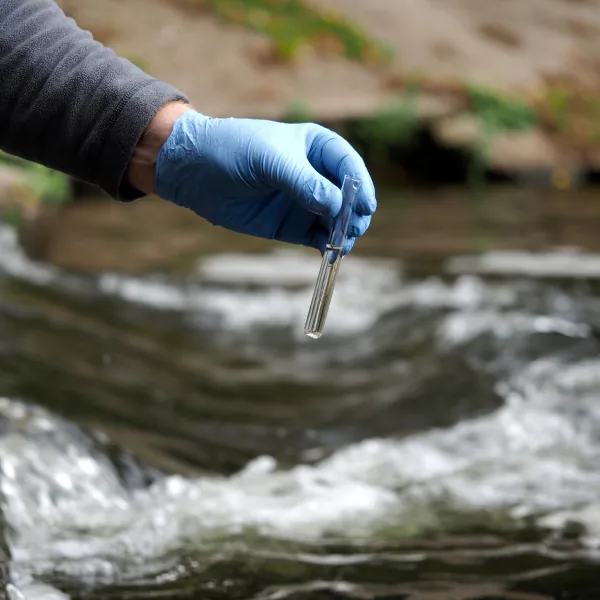
The rule's future is now uncertain. In early 2025, the EPA obtained temporary stays in the PFAS litigation, signaling a review that could lead to modifications such as regulating fewer PFAS, raising the MCLs, or extending compliance deadlines. The agency's designation of PFOA and PFOS as hazardous substances under CERCLA (Superfund) is also under review. In response to federal uncertainty, many states have proactively adopted their own PFAS rules — drinking-water limits and product bans — producing an increasingly complex, inconsistent regulatory patchwork across the country.
Lead and copper rules
Lead is a toxic heavy metal that enters drinking water primarily through the corrosion of plumbing — lead service lines (LSLs), solder, and fixtures — and it poses significant risks, especially the irreversible neurological damage it can cause in children. The original Lead and Copper Rule (LCR) of 1991 set a health-based goal of zero and an action level of 15 parts per billion (ppb).
Two recent strengthenings built on that. The Lead and Copper Rule Revisions (LCRR) took effect in October 2024, mandating initial LSL inventories. Then, in late 2024, the EPA finalized the Lead and Copper Rule Improvements (LCRI) (effective by November 2027), a major upgrade: it mandates full LSL replacement nationwide within 10 years (by December 31, 2037), lowers the lead action level to 10 ppb, improves tap sampling, and enhances public communication about lead risks.
Despite being finalized, the LCRI faces real implementation challenges. House Joint Resolution 44 (introduced February 2025) seeks to disapprove the rule under the Congressional Review Act; if successful, it would nullify the LCRI entirely and block similar future rules. Even if that fails, the rule's ambitious 10-year replacement mandate — and its cost — leave it politically vulnerable, whether through reduced enforcement vigor or diminished federal funding (such as from the Bipartisan Infrastructure Law or the Drinking Water State Revolving Fund) that LSL replacement depends on.
The bigger picture: deregulation and "cooperative federalism"
These individual changes aren't isolated — they reflect a consistent approach. The administration's stated priorities are reducing industry compliance costs, promoting domestic fossil-fuel development, and stimulating economic growth. Administrator Zeldin is advancing this through his "Powering the Great American Comeback" initiative, with actions that include new WOTUS rulemaking, reconsidering wastewater discharge limits for power plants and oil and gas, pausing PFAS litigation, and launching broad deregulatory reviews.
A central theme is cooperative federalism — the EPA taking a more supportive role while states lead on environmental protection. Proponents argue this enables localized solutions and reduces federal overreach. Critics counter that it can produce wide state-to-state variability in standards and enforcement, create "pollution havens," and leave regulatory gaps where resources lose federal protection without adequate state oversight — especially where states lack the funding, technical expertise, or political will to manage complex programs.
What it means for your tap water
These shifts have tangible implications, and they differ depending on where your water comes from.
- Municipal water users could see degraded source-water quality from narrower WOTUS protections, potentially weaker contaminant standards for substances like PFAS, and stalled progress on lead-pipe replacement under a weakened LCRI — possibly alongside higher utility bills and reduced public trust.
- Private well owners face distinct and potentially greater exposure. Their water generally isn't regulated under the Safe Drinking Water Act, making them solely responsible for its safety. Well quality depends directly on local groundwater, which could be compromised by reduced Clean Water Act protections for the wetlands and streams that naturally filter it — and well owners get no routine monitoring or official notifications when problems arise.
Protecting yourself amid the uncertainty
In a period of regulatory flux, awareness and vigilance are your best tools. If you're on a public system, reviewing your annual Consumer Confidence Report (CCR) is a starting point — while understanding its limitations. If you're on a well, the responsibility is entirely yours: test regularly and comprehensively through a state-certified laboratory for both common and local contaminants, including PFAS and lead.
Most importantly, you can establish a final barrier of protection at the point that matters most — your tap. A reverse osmosis (RO) system removes a broad spectrum of contaminants, including PFAS and lead, no matter which way the broader regulatory currents turn. Whatever happens at the federal or state level, that last line of defense stays firmly in your control.