Re-mineralizing Your RO Water is a Wave of Wellness 🌊
Reverse osmosis (RO) is a water-purification technology that uses a semipermeable membrane to remove ions, molecules, and larger particles from drinking water. It's highly effective at eliminating a wide range of contaminants — heavy metals, pesticides, chlorine, and other dissolved solids. One question comes up again and again, though: in stripping out the bad stuff, does RO also remove the naturally occurring minerals we want? This article addresses the nutritional reality of demineralized water, identifies the key minerals worth re-introducing, and walks through the methods for doing it.
Does demineralized water harm your health?
A common concern is that drinking demineralized water is bad for you because it lacks essential minerals. To evaluate that fairly, it helps to ask a simple question: how much do minerals in water actually contribute to your daily intake?
The answer, for most people, is: not much. The primary source of minerals for human health is a balanced diet — fruits, vegetables, dairy, and proteins. The mineral content of tap or well water varies enormously by location and is usually not a meaningful share of your Recommended Daily Allowance (RDA) for most essential minerals. The World Health Organization (WHO) has noted that while some minerals are present in drinking water, their contribution to total daily intake is typically very low. So for anyone eating a varied, nutrient-sufficient diet, the absence of minerals in RO water does not represent a nutritional deficiency — and the primary health benefit of RO, the dramatic reduction in harmful-contaminant exposure, remains fully intact.
That said, re-mineralizing is far from pointless. It can genuinely improve taste — added minerals raise alkalinity, offsetting the slightly acidic, "flat" character of pure RO water — and it offers a convenient way to supplement specific minerals for targeted purposes. In other words, think of it less as fixing a problem and more as a pleasant, optional upgrade.
The six minerals worth adding back
If you do choose to re-mineralize, the minerals you add should be chosen for their recognized physiological roles. These six are the ones most commonly considered.
- Calcium 🦴 — The most abundant mineral in the body, calcium is central to building and maintaining bones and teeth. It also acts as a signaling molecule in nerve transmission, muscle contraction, and hormone secretion.
- Magnesium 💪 — A cofactor in over 300 enzymatic reactions, magnesium is critical for protein synthesis, muscle and nerve function, blood-glucose control, and blood-pressure regulation.
- Potassium ❤️🩹 — An essential electrolyte required for normal cell function, fluid balance, nerve-impulse transmission, and muscle contractions — including those of the heart.
- Sodium 💧 — Another critical electrolyte that works alongside potassium to regulate fluid volume and blood pressure, and is vital for nerve function and nutrient absorption in the small intestine.
- Zinc 🛡️ — A trace mineral fundamental to immune function, protein and DNA synthesis, wound healing, and cell division, making it essential for normal growth and development.
- Selenium 🌿 — A component of more than two dozen selenoproteins that play key roles in reproduction, thyroid-hormone metabolism, DNA synthesis, and protection from oxidative damage.
How to re-mineralize your water
Several methods can re-introduce minerals into purified RO water. The right one for you depends on how much control you want over dosage, how consistent you need the results to be, and plain convenience.

Liquid mineral drops. These are concentrated solutions of ionic minerals you add directly to water, allowing precise, adjustable dosing and direct control over which minerals — and how much — you consume. Source them from reputable manufacturers to ensure purity and accurate formulation.
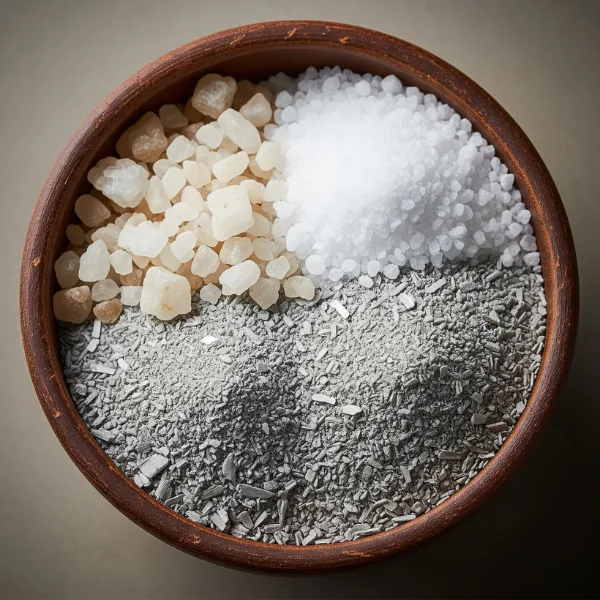
Granular minerals and salts. A small amount of unrefined, mineral-rich salt like Himalayan or Celtic sea salt introduces a broad spectrum of trace minerals. It's cost-effective, though it offers less precise control over specific concentrations than mineral drops do.
Hydration-multiplier products. These commercial powders are formulated to enhance hydration, typically delivering a strong dose of electrolytes like sodium and potassium along with other minerals and sometimes vitamins. They're especially useful for replenishing electrolytes after strenuous activity — just scrutinize the label for added sugars or artificial ingredients!
The most seamless option of all is to let your system do it for you: an inline remineralization filter added as a final stage re-introduces minerals automatically as the water leaves your RO system, with no measuring or mixing required.
The bottom line
The primary function and health benefit of a reverse-osmosis system is the effective removal of a broad spectrum of contaminants found in municipal and well water. The worry about demineralization is largely unfounded for anyone with a nutritionally complete diet, since water simply isn't a primary source of minerals. Re-mineralizing is a secondary, optional step — a way to fine-tune your water's taste and add a supplemental source of nutrients like calcium, magnesium, and potassium. By combining the purifying power of RO with a deliberate re-mineralization strategy, you get drinking water that's both free of harmful contaminants and carrying a few of the building blocks for great health. 🌊