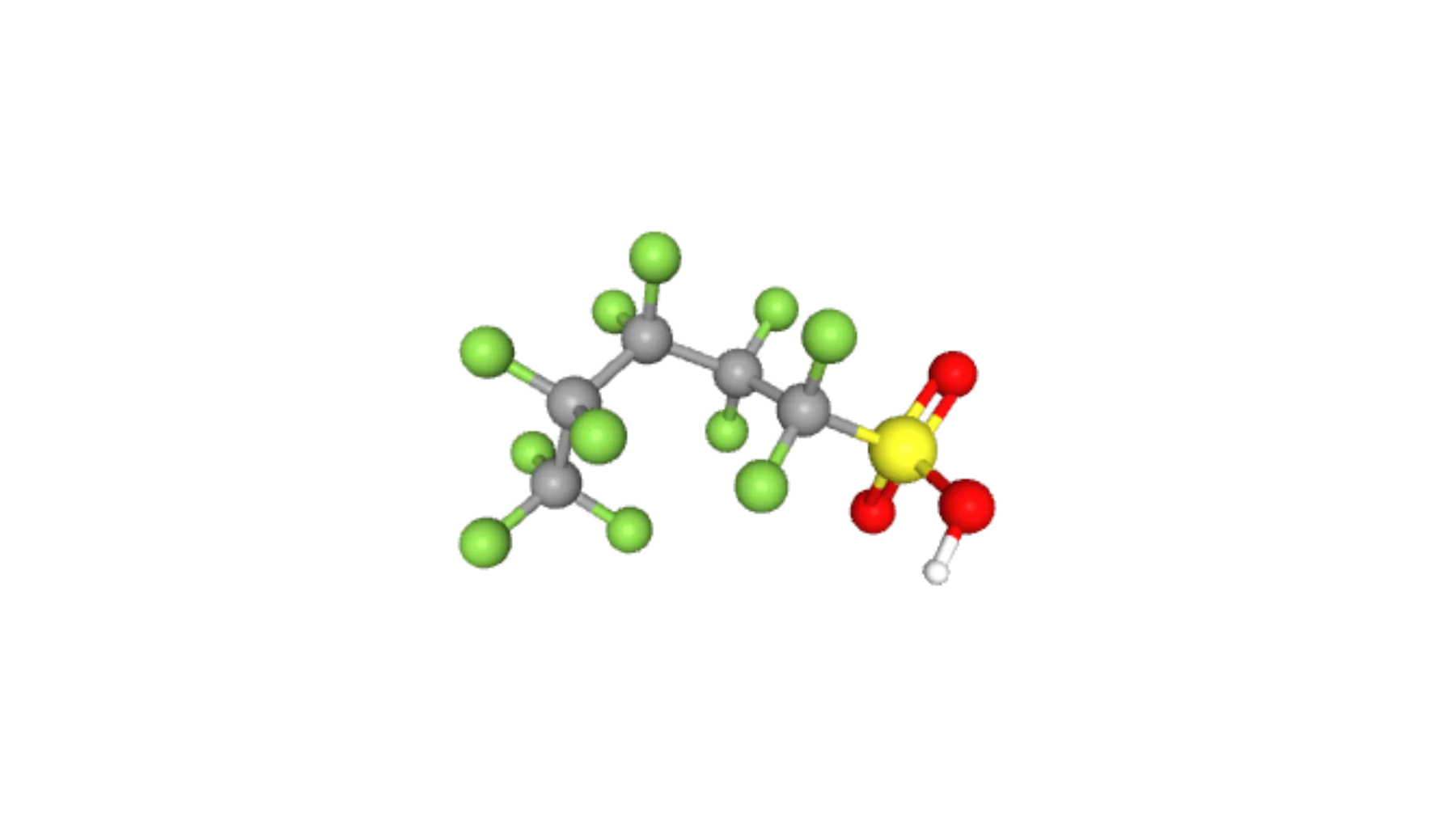
PFPeS
Perfluoropentane sulfonic acid
1,1,2,2,3,3,4,4,5,5,5-undecafluoropentane-1-sulfonic acid
A 5-carbon short-chain perfluoroalkyl sulfonic acid, between PFBS (4C) and PFHxS (6C). No PFPeS-specific EPA RfD; risk class-extrapolated from PFAS. Detected at 299 utilities serving 9.4M people across 28 states.
Primary concern: Class-extrapolated PFAS effects (no PFPeS-specific RfD)
Affected organ systems
Health effects
Exposure routes
Vulnerable populations
Overview
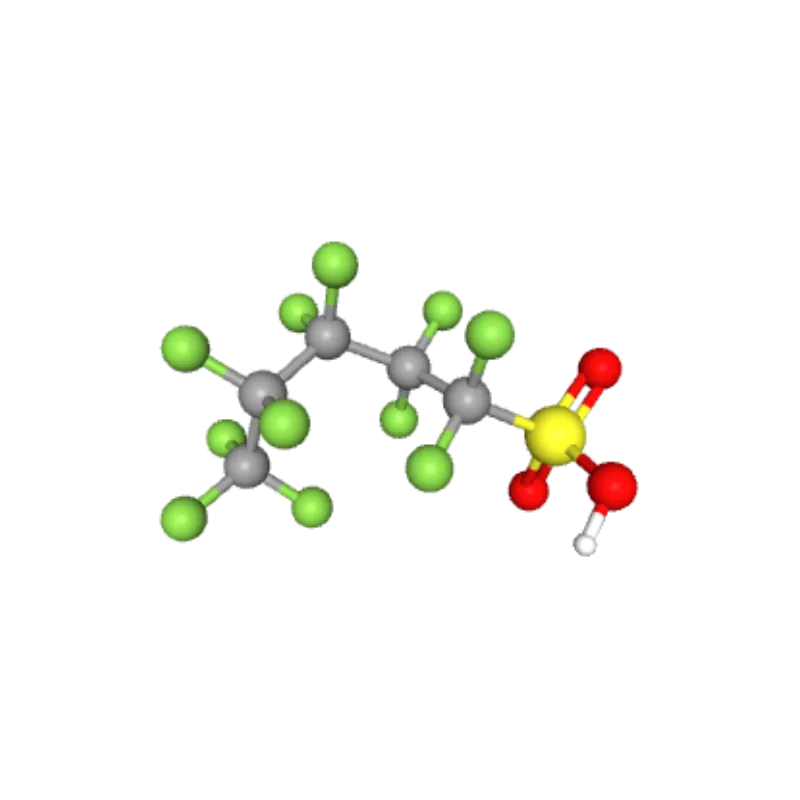
Perfluoropentanesulfonic acid (PFPeS) is a 5-carbon perfluoroalkyl sulfonic acid (C5HF11O3S, MW 350) — between PFBS (4 carbons) and PFHxS (6 carbons) on the PFSA chain-length spectrum. OECD classifies PFSAs with fewer than 6 carbons as short-chain, placing PFPeS alongside PFBS rather than with the NPDWR-regulated long-chain PFSAs (PFHxS, PFHpS, PFOS). PFPeS has been detected at 299 U.S. public water systems serving roughly 9.4 million people across 28 states. There is no PFPeS-specific EPA IRIS Reference Dose and no individual federal MCL; PFPeS is also not included in the 2024 NPDWR Hazard Index mixture (which covers PFHxS, PFNA, HFPO-DA, and PFBS).
Pollution sources
Sources
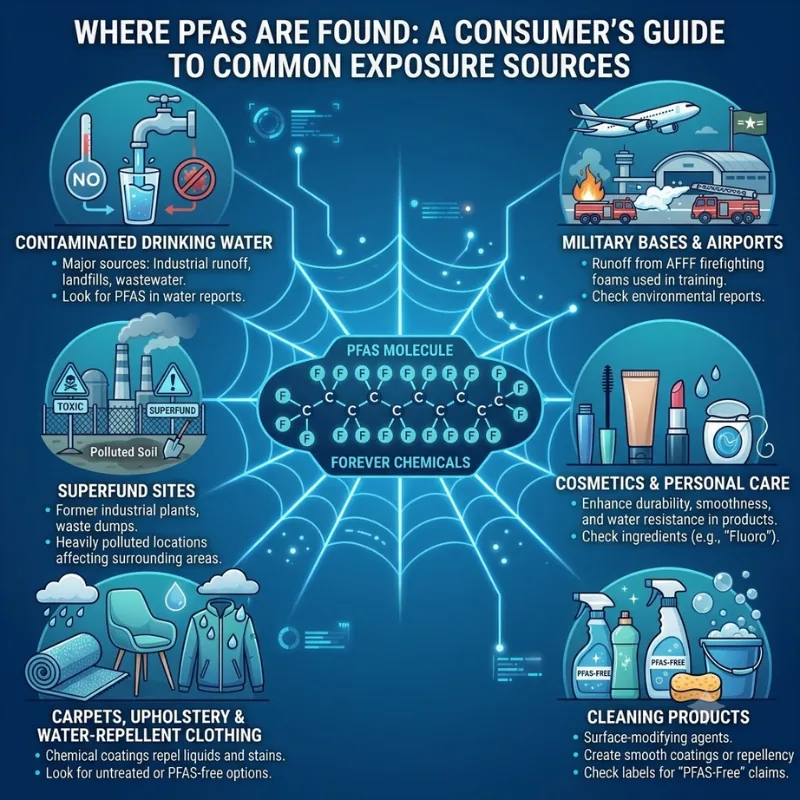
PFPeS contamination carries a strong AFFF firefighting-foam fingerprint, consistent with other long- and medium-chain PFSAs: Camp Pendleton (North), CA at 6.45 ppt over 36 tests is a direct on-base detection; Ladd Center, RI (22.8 ppt) and Exeter Job Corps Center, RI (21.9 ppt over 15 tests) trace to the former Navy Construction Battalion Center Davisville footprint; Fort Riley, KS (4.30 ppt) is another on-base detection. Industrial and 3M-era sources also appear: the Ann Arbor, MI city system (7.37 ppt, serving 118,017 people) sits within the regional fluorochemical-industry corridor, and Cottage Grove, MN (5.45 ppt over 31 tests) and Oakdale, MN (3.01 ppt) reflect the 3M Cottage Grove groundwater plume. PFPeS arises both as a primary industrial / AFFF release and as a biotransformation product of longer perfluorooctanesulfonyl-precursor chemistries (Scotchgard-era surfactants).
Health risks
There is no PFPeS-specific Reference Dose, Health Reference Level, or carcinogen classification from EPA, IARC, or NTP. Risk assessment is class-extrapolated from the better-studied perfluoroalkyl sulfonic acids: PFOS, PFHxS, and PFBS share the dose-defining endpoints reported in EPA's 2024 NPDWR and 2023 IRIS reviews — hepatotoxicity, immune suppression (reduced antibody response to childhood vaccines), thyroid hormone disruption, and developmental effects. PFPeS has not been formally classified as a carcinogen by IARC or NTP. Human pharmacokinetic data for PFPeS is sparse; expected behavior interpolates between PFBS (median serum half-life ~26 days) and PFHxS (~8.5 years), with PFPeS likely sitting closer to PFHxS than to PFBS on a chain-length basis, but no defensible single half-life value is published.
Effective treatments
Does not remove
NSF certifications
Water treatment
PFPeS responds to the standard long-chain PFAS treatment train more effectively than the short-chain PFCAs: the sulfonate head group provides electrostatic affinity for anion exchange resin, and the 5-carbon perfluorinated tail provides adequate hydrophobic adsorption onto granular activated carbon (GAC). GAC breakthrough on PFPeS occurs later than on PFBS (4C) but earlier than on PFHxS (6C) or PFOS (8C). High-pressure membranes (reverse osmosis, nanofiltration) are also highly effective. Conventional treatment processes — coagulation, sand filtration, disinfection, UV, and ozonation — do not remove PFPeS. Boiling concentrates rather than removes it. NSF/ANSI 53 and NSF P473 certify point-of-use filters for general PFAS reduction; NSF/ANSI 58 covers RO systems. Utilities meeting the federal PFOS / PFHxS NPDWR MCLs with GAC, AIX, or RO will incidentally control PFPeS at the same time.
Gallery
Related contaminants
Chemistry + classification data sourced from public databases (PubChem, EPA CompTox, IARC monographs); 3D molecular models from 3d.nih.gov where available.